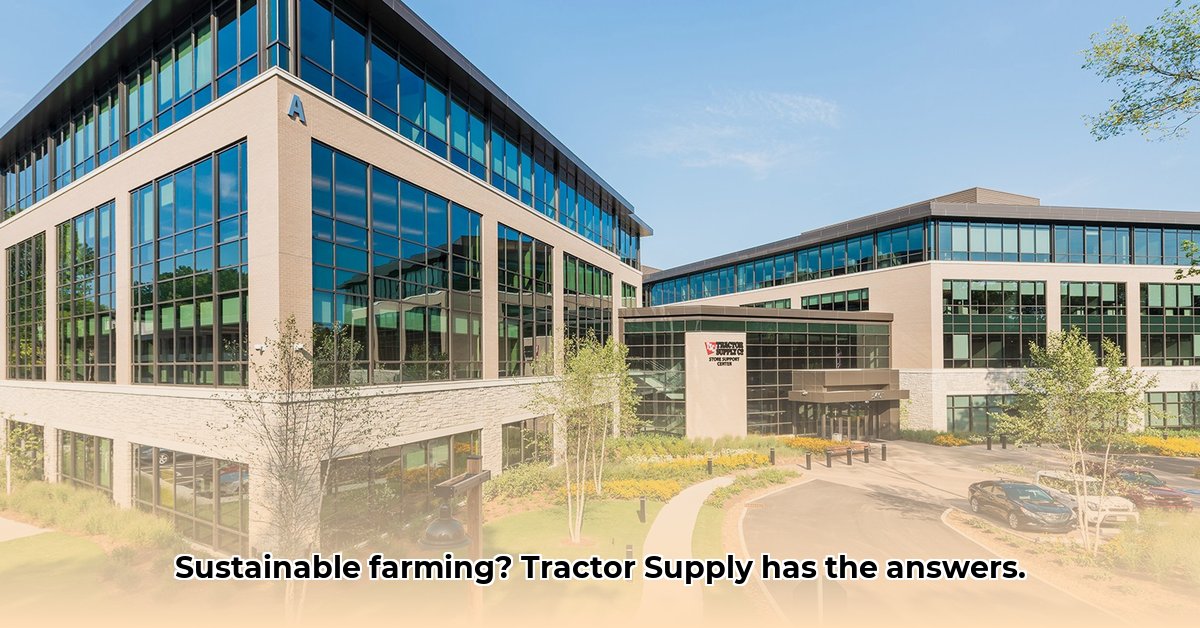
Tractor Supply Company: A Case Study in Rural Retail and Sustainable Agriculture Support
Tractor Supply Company (TSC) holds a dominant position in the rural retail market, supplying essential goods and services to farmers and ranchers across the United States. This article analyzes TSC's role in supporting sustainable agricultural practices, examining its strengths, limitations, and potential for future contribution to a more environmentally responsible agricultural sector. We will explore both the positive aspects of TSC's current operations and identify areas requiring significant improvement. For more detailed information on TSC's initiatives, visit this helpful resource.
TSC's Strengths in Supporting Sustainable Agriculture
TSC's extensive network of stores, particularly its strong presence in rural communities, provides crucial accessibility for a broad range of agricultural producers. This widespread availability offers farmers, ranchers, and even home gardeners convenient access to necessary supplies and equipment. The company also offers a range of products that indirectly support sustainable agricultural practices, including organic feed, water-efficient irrigation systems, and tools promoting soil health. This readily available resource empowers smaller farms and individual producers to implement more environmentally conscious practices. The practical knowledge frequently possessed by TSC employees also provides valuable on-the-ground support and advice to rural producers.
TSC's Limitations and Areas for Improvement
Despite its potential, TSC currently lacks explicit and publicly defined sustainability initiatives. A clear absence of comprehensive goals regarding carbon footprint reduction, waste management strategies, and supply chain sustainability represents a significant shortcoming. This lack of transparency poses a risk to TSC's brand image, particularly given the increasing consumer demand for businesses to demonstrate clear commitments to environmental responsibility. Moreover, the growing presence of competitors actively promoting their eco-friendly credentials presents a challenge to TSC's long-term market position. The evolving regulatory landscape surrounding sustainable agriculture also presents a significant hurdle, requiring TSC to adapt rapidly to comply with increasingly stringent environmental standards.
Actionable Recommendations: A Multi-Stakeholder Approach
To significantly enhance its contribution to sustainable agriculture, TSC must adopt a multifaceted strategy involving internal changes, proactive outreach, and collaboration with external stakeholders.
For TSC Management:
- Comprehensive Sustainability Audit: Conduct a thorough assessment of TSC's environmental impact across its operations, encompassing energy consumption, waste generation, and supply chain practices.
- SMART Sustainability Goals: Establish Specific, Measurable, Achievable, Relevant, and Time-bound goals for reducing environmental impact, covering areas such as greenhouse gas emissions, waste reduction, and sustainable sourcing of products. Publicly report on progress annually.
For TSC Marketing:
- Highlight Sustainable Product Offerings: Clearly label and promote products that support sustainable practices, increasing their visibility both in-store and online.
- Transparency and Storytelling: Communicate TSC's existing efforts supporting local farmers and sustainable agriculture, showcasing success stories and fostering transparency regarding sustainability improvements.
For Farmers and Rural Communities:
- Educational Resources: Provide workshops, online resources, and educational materials on sustainable farming practices, assisting farmers in adopting environmentally friendly methods.
- Expanded Sustainable Product Lines: Increase the availability of eco-friendly products, including organic seeds, compost, and water-efficient equipment.
For Environmental Groups and Stakeholders:
- Collaborative Partnerships: Establish partnerships with environmental organizations to develop and implement joint sustainability initiatives, fostering open communication and shared goals.
- Community Engagement: Actively engage with local communities, supporting initiatives that promote sustainable agriculture and environmental stewardship.
Assessing the Risks: Proactive Mitigation Strategies
TSC faces several potential risks related to its sustainability efforts, summarized below:
| Risk Category | Likelihood | Potential Impact | Mitigation Strategies |
|---|---|---|---|
| Negative public perception due to lack of clear sustainability initiatives | Moderately High | Significant | Proactive communication of sustainability goals, transparent reporting, and partnerships with environmental organizations. |
| Increased competition from eco-conscious retailers | High | Moderate to High | Differentiation through community focus, convenient access, and value-added services supporting sustainable agriculture. |
| Supply chain disruptions related to sustainable sourcing | Medium | Moderate | Diversified sourcing, strong supplier relationships, robust risk management, and investment in traceability and transparency. |
| Regulatory changes in sustainable agriculture | Medium | Moderate to High | Close monitoring of regulations, proactive adaptation, investment in research and development of sustainable practices. |
Conclusion: Tractor Supply's Potential for a Sustainable Future
Tractor Supply Company holds a unique position to significantly contribute to the advancement of sustainable agriculture, particularly within the rural communities it serves. By proactively addressing its current limitations, implementing the recommended strategies, and fostering collaboration among stakeholders, TSC can significantly improve its environmental performance, strengthen its brand reputation, and contribute to a more environmentally responsible and economically sustainable agricultural sector. The company’s considerable reach and established trust within rural communities makes it exceptionally well-suited to lead this transition. The future of sustainable farming depends, in part, on the decisions and actions taken by companies like Tractor Supply Company.